
Artificial mediums possess the unique ability to take our imaginations of beauty and realism to a whole new level. Charcoal and graphite are two of these beloved mediums, providing us with an enthralling way to realistically depict the scenes and figures that come to mind. The remarkable relationship between charcoal and graphite is the basis of this article as we explore the fine points of these two materials, and discover why they make achieving a realistic aesthetic for art pieces easier than ever before.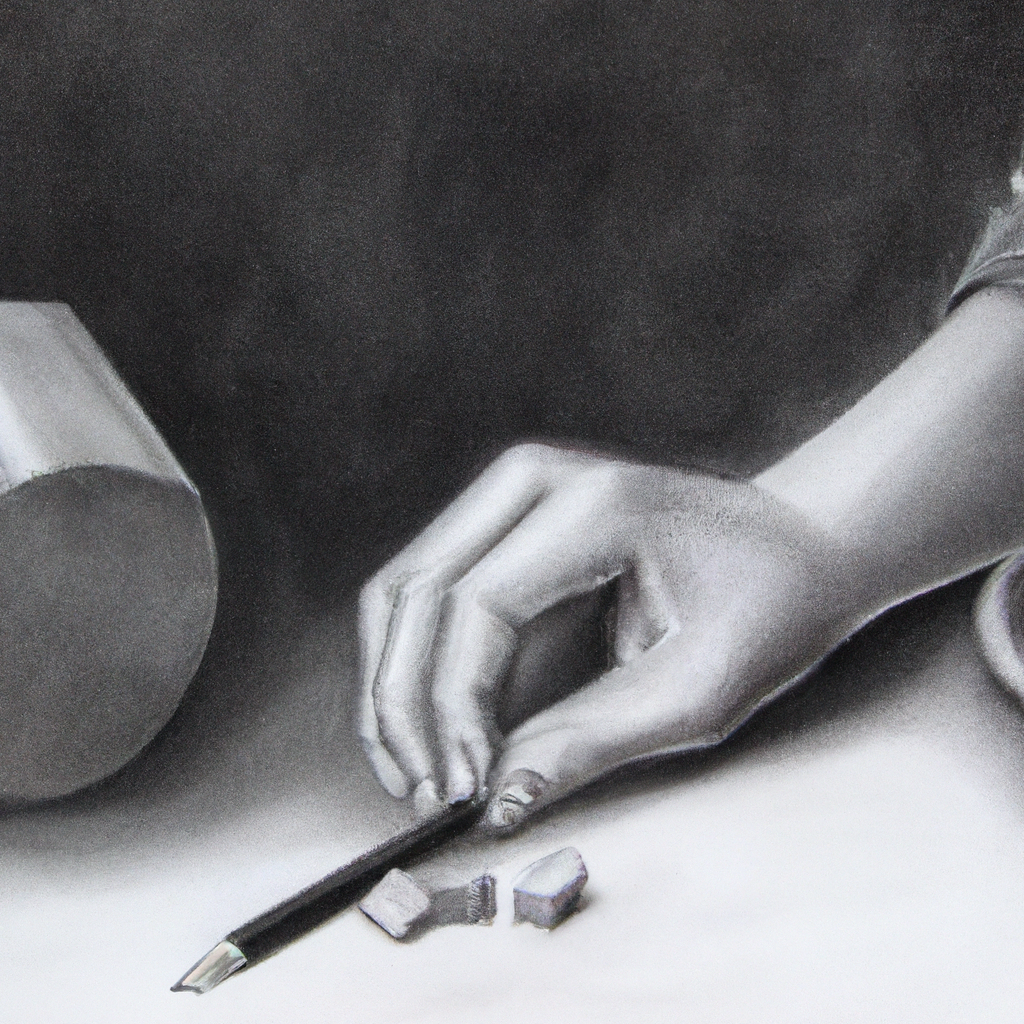
1. Exploring the Different Types of Drawing
Pencil Drawing
- Pencil drawing is one of the oldest and most popular ways to make art. It can be quite expressive and dynamic if you know the techniques to get that effect.
- Using only pencils, you can create everything from still-lifes to landscapes, portraits, and abstract drawings.
- You can achieve various shades of gray by varying the pressure you apply to the pencil while drawing, and you can achieve highlights by erasing over graphite.
Charcoal Drawing
- Charcoal is an exciting tool to experiment with if you are into drawing. It produces softer, atmosphere-filled drawings, which make a nice contrast to realistic pencil drawings.
- Charcoal creates lines that are quickly applied and erased, leaving an interesting texture.
- It’s great for black-and-white drawings, as the effects of smudging and blending are best seen in this medium.
Pastel Drawing
- Pastel is an interesting medium that’s both fun and challenging. You create art by pressing soft pastel onto paper.
- The colors are incredibly vivid, and you can use chalk, oil, or water soluble pastels. Depending on the type, you draw with your hands, a brush, or a rubbing cloth.
- The medium is excellent for portraits and still-lifes, and you can achieve interesting gradients with it.
Watercolor Drawing
- Watercolor painting is a fun way to make art with beautiful and soft colors that blend into each other.
- With some practice, you can use the colors to create interesting shades and patterns, as well as bright and interesting washes.
- Be sure to start slowly and practice basic brushstrokes before you start a finished piece.
2. Capturing the Detail of Everyday Life with Charcoal and Graphite
Thanks to the versatility of charcoal and graphite, capturing the detail of everyday life is now easier than ever before.
Charcoal is a unique art medium that’s heavily associated with classic sketching of figures and natural scenes. It’s been around for tens of thousands of years, originally being used by ancient practitioners of cave painting. Charcoal is made from various plants and is known to produce deep and powerful effects in the artwork. It can produce a very deep level of contrast, making fine line work, such as hair, eyebrows, and clothing detail very vibrant. Charcoal is the perfect material for creating beautiful sketches with a natural feel.
Graphite is a great choice for those looking for a more refined and delicate approach when drawing or sketching. Graphite is especially suited for drawings with intricate detail. It produces texture that adds depth and richness to the artwork. This type of medium is also highly versatile when it comes to creating different type of effects. From light and airy sketches to heavy and bold images, everything can be done with graphite.
These two mediums are great for capturing everyday life. Whether it’s a cityscape, a portrait, or a still-life, charcoal and graphite make it easy to realize the beauty of everyday life. Here are some tips for working with these mediums to capture the detail of everyday life:
- Keep your strokes light and gentle when sketching with charcoal or graphite.
- Focus on details like the shape and structure of a subject, rather than the colour.
- Practise blending with a rag or brush to build up layers of tones and shadows and create more depth.
- Creating a loose sketch with charcoal, before adding the more refined details with graphite, makes a great way to bring out the full beauty of a subject.
Charcoal and graphite are both powerful mediums that can open up a whole world of artistic possibilities. With a little bit of time and practice, everyday life can be captured in a most beautiful and meaningful way.
3. Discovering the Secrets of Achieving Realism with Charcoal
Charcoal drawing is a wonderful medium which allows artists to explore many creative possibilities and achieve beautiful, realistic artworks. The key to achieving realism with charcoal lies in the details. So, let’s take a closer look at the secrets of achieving realism with charcoal art.
Choose the Right Surface
The surface of a drawing is a fundamental factor in charcoal art. If you want to draw realistically, you should opt for a smooth, non-absorbent paper that is good at retaining its tooth. With the proper surface, everything becomes a lot easier. You can achieve luminous tones and attractive effects.
Work in Layers
Working in layers is the key for realistic charcoal drawings. Start by lightly sketching your subject matter using a softer grade of charcoal. Then gradually work up to the darkest elements and the highlights using a hard grade of charcoal. You can also use blending techniques like stumping, smudging and blending to smudge soft transitions of shade.
Vary the Type of Charcoal
When aiming for realism in your charcoal artworks, it is important to vary the type of charcoal you use. Different types of charcoal have distinct appearance and a wide range of values, so they can help you to achieve the depth and texture that is seen in more realistic drawings.
Use Different Textures
Using textures adds depth and reality to your charcoal drawings. To achieve this effect, you can apply a textured medium like texture paste to the paper and then draw with the charcoal over it. You can also use rubbing plates, mesh or textured drawers to create interesting effects.
Emphasize the Highlights
Highlights are the lightest element in a drawing, so they can be used to make the artwork more realistic. To emphasize the highlights, use a kneaded eraser to lightly lift away some of the underlying residue and to create an illusion of light.
4. Unlocking the Potential of Graphite to Create Realistic Art
Using graphite to create artwork can be a rewarding—that’s if the artist knows how to unlock its potential. The natural beauty of graphite brings 3-dimensionality to life, making it possible to capture subtle details that can be missed using other tools.
When it comes to creating realistic art, there are some tips you should keep in mind:
- Start with a high-quality pencil set. This will give you a range of grades, from soft to hard, for creating varied effects.
- Use paper with a smooth finish. The smoothness of the paper will make it easier to create subtle gradations.
- Use a range of simple techniques. To create the illusion of depth and realism, you can use hatching, stippling, blending, and scraping.
- Pay attention to light and dark contrasts. Keeping a keen eye out for a strong dark-light contrast gives art profound depth and visual interest.
When done right, graphite artwork has the power to impress. With practice, you’ll be able to create stunningly realistic pieces that will leave a lasting impression.
To ensure that you get the most out of your graphite drawings, it’s essential that you use the right instruments. Investing in a good sharpener, eraser, and paper stumps will ensure that every stroke of the pencil is precise and clear.
Finally, a valuable way to practice your drawing with graphite is by studying the work of other artists. Analyzing different techniques and attempting to replicate them can offer unique insights about the medium.
Whether graphite or charcoal, both materials provide unique artistic possibilities with their amazing capacities to bring out realism in your drawings. With an understanding of these materials and practice in wielding them correctly, you can surely create beautiful artwork that conveys a reality that will astound your admirers. So go ahead and explore these wonders of nature – your creative possibilities are endless!
