
Creativity often lies in being able to take something intangible and turn it into something tangible. Visualizing abstract concepts into artwork can be a challenging yet immensely fulfilling process, allowing us to express our thoughts and feelings in a unique way. Through this article, explore how we can use art to give form to our abstract notions—creating a physical manifestation of ideas, thoughts, and even emotions.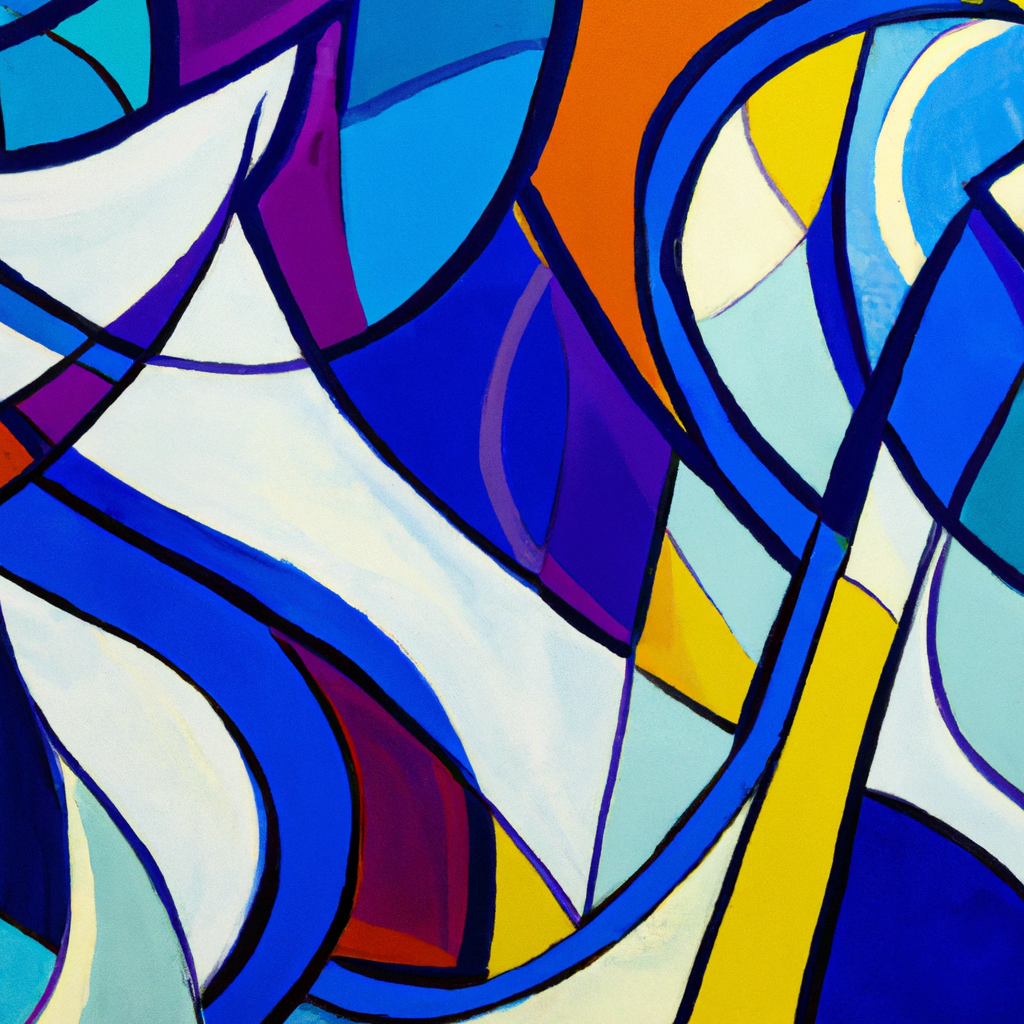
1. Unpacking the Creative Power of Artistic Expression
Creative expression in the form of art has been proven to offer many mental and emotional benefits. It has been used as an avenue of self-expression for centuries, and it is a legitimate form of therapy for many. Creative expression can help us navigate difficult periods in our lives, express emotions that are difficult to verbalize, and tap into our own creative power.
- Accessing Emotions – Creative expression can often help process and identify emotions that are difficult to vocalize, laying the groundwork for a greater understanding of ourselves. Taking time to be creative can also help release pent-up or pent-up emotions.
- Exploring Our Inner World – Artistic expression can be a powerful tool for exploring our subconscious mind and gaining greater insights into our thoughts, actions and behaviors.
- Lightening the Mood – Making art can also be a great—and often therapeutic—way to de-stress and relax. Even if you’re just scribbling some mindless doodles, the act of creativity can help reframe your perspective, shift negative thought patterns, and bring a lightness and joy back to our day.
- Evoking Creativity – Artistic expression is a great way to access our own creative potential and bring more of our ideas into reality. It can help us come up with new solutions to existing problems and open new doors for our future.
The creative power of art is up for the taking. All it takes is a willingness to try and explore, integrating creative expression into your daily practice can help you find the power and passion to create and if nothing else, a little bit of fun.
Taking the time to be creative can be a powerful way to express yourself, access and process emotions, explore your thoughts and beliefs, and lighten the mood. So why not give it a try? Get creative today and see what creative juices start flowing.

2. Exploring Visualization of Abstract Concepts
Visualizing abstract concepts can be a great way to help people better understand and interact with them. While these ideas may seem intangible and ephemeral, by turning them into visual elements, we can increase our understanding of their meanings and relationships. Here are a few ways to explore visualization of abstract concepts:
- Drawings and Paintings – Drawings and paintings are great ways to explore visualizing abstract concepts. They can evoke powerful emotions, convey deep meaning, and reveal insights that may have previously gone unnoticed. Drawings and paintings can also bring clarity to complex and difficult-to-grasp ideas.
- Maps and Diagrams – Maps and diagrams are great tools to learn more about abstract concepts by using spatial relationships to illustrate them. Maps and diagrams can be used to map out relationships between concepts, highlight unexplored connections, and bring new clarity to difficult concepts.
- Digital Visualizations – Digital visualizations, such as data visualizations, interactive infographics, and immersive 3D animations, are powerful tools that can be used to express and explore abstract concepts. These visualizations can make complex concepts more accessible and help people to gain new insights and perspective.
Visualizing abstract concepts can be an enlightening journey. It can help to broaden our understanding of difficult concepts and open up new opportunities for exploration. Whether it’s a drawing, painting, map, diagram, or digital visualization, exploring these ideas visually can be a great way to gain a deeper understanding of abstract concepts.
3. Perspectives on the Transformative Nature of Art
Over it’s lengthy history, art has consistently demonstrated a capacity to transform and evolve. From prehistoric man to modern society, the purpose of visual art has shifted as its literal and metaphorical applications remain applicable. In the modern era, art is admired for its beauty and relevance, while its effects have a much deeper reach than commonly considered. Here are three .
Theory of Empathy
One of the most innovative ways of looking at art is through the Theory of Empathy. According to the theory, artistic works can directly affect emotions when viewed or experienced. This could happen when witnessing a painting, listening to a piece of music, or even reading a story. It’s believed that art transports the audience into a moment, allowing them to relate to the subject matter in a unique manner. This can have a powerful, lasting effect on the audience’s emotions.
Scientific Approach
An alternate approach to the transformative nature of art is to examine it from a scientific standpoint. This view indicates that art can affect perception and possibly behavior. It suggests that art has the capacity to positively influence people, improving their mood, expanding their knowledge, and even forming opinions that engage with the world. Studies have shown that the effects can span generations, creating a lasting cultural imprint.
Societal Impact
Finally, art has a very potent impact on society. It can be thought of as a cultural artifact, or a representation of the values of the community. This concept is a form of communication, as the artwork reflects the thoughts and emotions of the artist and the audience. Art often speaks indirectly of its time period, offering a glimpse into equality, nature, technology, and even the crisis happening throughout the world. As a result, art can be a form of protest, transforming societies and driving social movements forward.
Art has the ability to simultaneously convey beauty, emotion, and meaning. It’s this duality that makes art a transformative medium for generations. Its capacity to influence viewers, both emotionally and intellectually, makes it a powerful force in the modern world.
4. Historical Context for Artistic Representations of the Intangible
When we look through the lens of art to examine how humans in the past have conceptualized the intangible, it can be a rewarding experience. From ancient cave paintings to modern-day installations, people have sought to represent the illusory or undefined through the medium of art.
One of the most iconic examples of representation of the intangible is the Kalpa Tree. This Buddhist representation of the cycle of existence can be traced back to Indian scriptural sources written in the 3rd century BCE. In this representation, boughs of the tree interweave in an infinite way to form the shape of a helicopter, signifying the ephemeral nature of reality.
In the 15th century, a school of painting known as ink wash painting emerged in East Asia. This art style made use of blurred lines and monochrome washes to create an ethereal, intangible feel for subject matter. One example of this is the Mountain and Waterscapes style of East Asian painters like Shen Zhou and Sesshu Toyo. These artists sought to capture the intangible essence of their landscapes; with trees, rocks, clouds and mist depicted in a dream-like, blurry fashion, conveying a sense of motion and movement.
The 19th century brought an explosion of avant garde art styles, challenging the conventions of traditional art. Many artists, including Wassily Kandinsky and Paul Klee, sought to convey the intangible through abstract shapes, surrealist dreamscapes, and geometric shapes. These art movements, such as expressionism, brought to life a whole new way of viewing and experiencing the intangible.
Finally, contemporary art has pushed the boundaries of what is considered to be tangible and intangible, with installations such as Yoko Ono’s Sky Voice, which uses the medium of art to express the emotional rollercoaster of the human experience.
These examples demonstrate how through the ages, artists have used their talents to capture and express the intangible, providing us with an insight into how people have conceptualized and perceived the world around them.
Using their imagination, artists can turn abstract concepts into tangible illustrations, giving us a glimpse of the beauty hidden beneath the surface. As we look at the arts and marvel at the mastery of those who represent the intangible, let us also keep our minds open to the possibilities we can create with a little creativity – visualizing abstract concepts of our own and exploring what our inner vision can bring to life.
